


Airman No. 1 Cream GMT 36
- Accessories
- APOLLON CHRONOGRAPH
- AVIATION CHRONOGRAPH
- BRACELETS 22 MM
- CANVAS & DENIM STRAP
- LEATHER STRAP
- MARINE CHRONOGRAPH
- METAL STRAPS
- NAV.B-UHR
- NYLON & PERLON STRAP
- OCEAN 39
- OCEAN 39 GMT
- OCEAN FORTY-FOUR
- OCEAN ONE VINTAGE CHRONOGRAPH
- OCEAN TWO
- PREMIUM AVIATION WATCH
- RACETIMER CHRONOGRAPH
- RACETIMER CHRONOGRAPH
- RUBBER STRAPS
- TRITON
- VEGAN STRAP
- Watch Accessories
- Watches
- Tablets
- Software
Your shopping cart is empty!
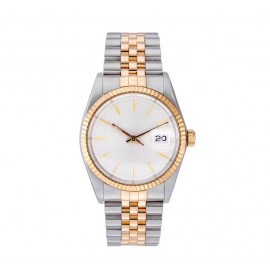

Product Description
Smaller watches are indeed getting back in style, and they’re here to stay. At a time where many watch brands are shaving a few millimeters off their timepieces to embrace the enchanting vintage size, dive watches don’t have to look like giant nautical clocks on the wrist anymore. Having said that, Glycine dropped a range of exciting new Airman models coming in a delicate 36mm form factor, the exact size from the first ever Airman back in 1953. Relish this new introduction with a splendor of this heritage design, a welcoming sapphire crystal upgrade and a reliable automatic movement packed full of Swiss-made goodness.
The 1950s was dubbed the Golden Age of Flying when commercial air travel was in its early days with limitless booze and a thick stench of cigarette smoke filling the plane. Having lobster was the norm for an in-flight meal. Oh, those were the good old days. Alongside the massive boom of the aviation industry, wristwatches inspired by aviation were also flourishing in that era. Legendary watches such as the Breitling Navitimer and the Zodiac Sea Wolf GMT were later introduced with the advent of transcontinental travel.
While there are many big names that manufacture aviation-inspired timepieces today, the Swiss watch manufacturer Glycine was the first to produce a watch with a 24-hour rotating bezel, the Glycine Airman, in 1953. The birth of this historic timepiece resulted from a conversation that sparked between one of Glycine’s employees, Samuel Glur, and a pilot during one of his flights. The pilot expressed his interest in a watch that had a 24-hour bezel feature, a function much needed by pilots to track multiple time zones. This was a feature that became well known around the watch world with the release of Rolex’s GMT-Master a year later in 1954.